📞 Call (615) 535-5291 — Free Estimate
What causes crawl space mold is a question we hear constantly from Murfreesboro homeowners — and the answer almost always comes back to moisture. Here’s what’s actually happening beneath your home and what you can do about it.
The Three Ingredients of Crawl Space Mold
Mold needs three things to grow: moisture, organic material, and the right temperature. Crawl spaces in Middle Tennessee provide all three in abundance. Ground moisture rises through unprotected soil, humid outdoor air enters through crawl space vents, and wood framing provides the organic material mold feeds on. The result is one of the most common home problems we see throughout Rutherford County.
Vented Crawl Spaces
The single biggest contributor to crawl space mold in Murfreesboro homes is the vented crawl space design. Most homes built before the 2000s — and many built after — have vents in the crawl space foundation walls designed to allow air circulation. In theory this was meant to reduce moisture. In practice it does the opposite in humid climates.
During Middle Tennessee summers, outdoor humidity regularly exceeds 80%. When that humid air enters a cooler crawl space it condenses on the wood framing and insulation — creating ideal mold growing conditions within days. The stack effect then pulls mold spores upward into your living space.
Missing or Damaged Vapor Barriers
Ground moisture is another major cause of crawl space mold. Without a quality vapor barrier covering the crawl space floor, moisture rises continuously from the soil beneath your home. This keeps the crawl space environment persistently damp — exactly the conditions mold thrives in.
Older homes often have no vapor barrier at all. Homes with existing barriers frequently have thin, torn, or improperly installed barriers that provide minimal protection.
Plumbing Leaks and HVAC Condensation
Slow plumbing leaks and condensation dripping from HVAC ductwork are common secondary causes of crawl space mold. These introduce liquid water directly into the crawl space environment and can cause rapid mold growth in localized areas.
How to Fix It
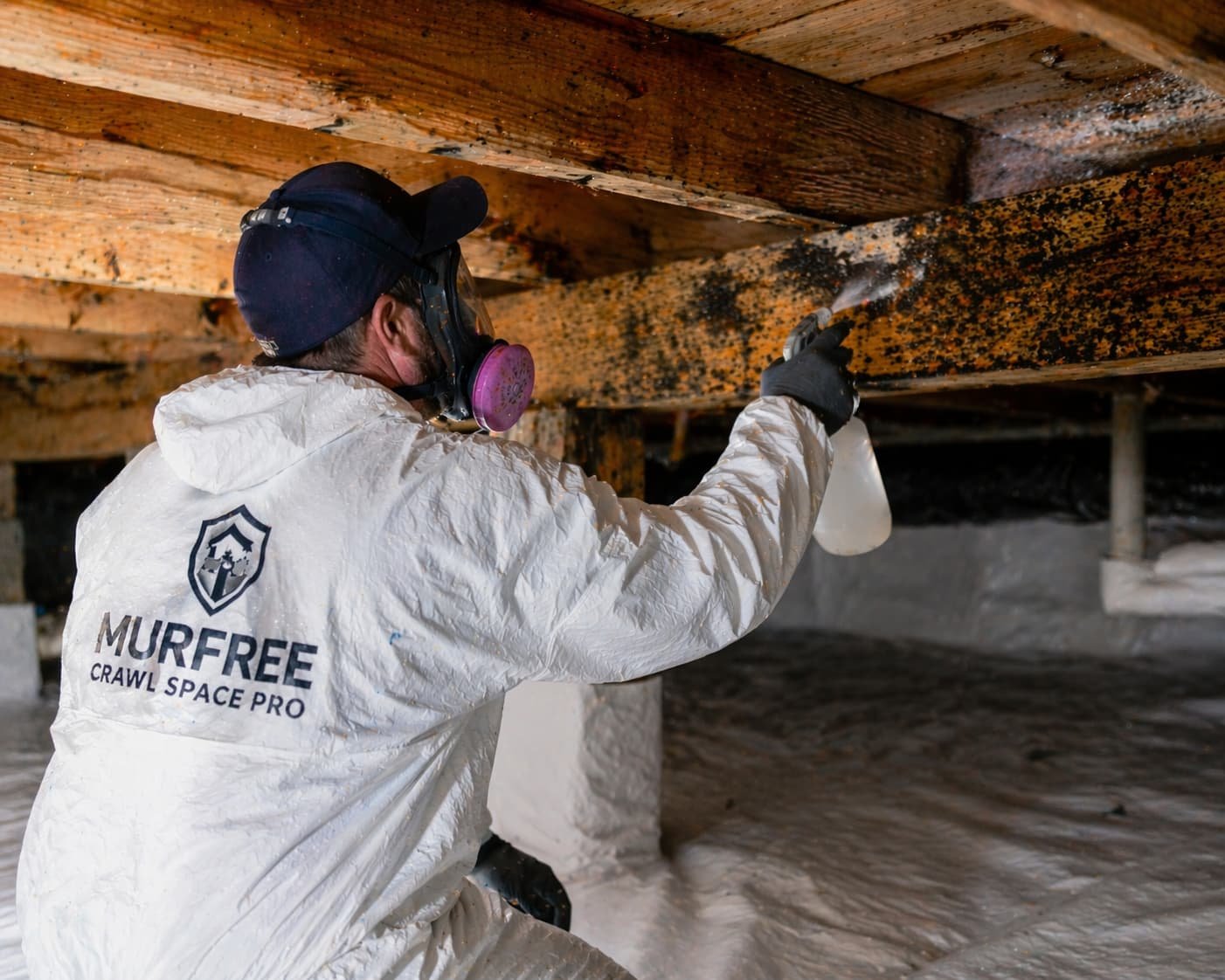
Addressing crawl space mold requires two steps: removing the existing mold and eliminating the moisture source that caused it. Mold remediation treats affected surfaces and removes damaged materials. A complete crawl space encapsulation then seals the space against the moisture conditions that caused the mold in the first place.
Encapsulating over active mold without remediating first traps spores beneath the barrier and allows mold to continue growing unseen. Always remediate before encapsulating.
Get a Free Crawl Space Inspection
If you suspect mold in your crawl space, don’t wait. Contact Murfreesboro Crawl Space Pro for a free inspection and estimate. Call (615) 535-5291 or request your estimate online.