📞 Call (615) 535-5291 — Free Estimate
Crawl space encapsulation and crawl space vapor barrier installation are terms that are often used interchangeably — but they describe different scopes of work, and understanding the distinction helps Murfreesboro TN homeowners make the right decision for their specific crawl space conditions. This post explains what each involves, how they differ, and which approach is right for different situations in Middle Tennessee’s climate.
What a Crawl Space Vapor Barrier Is
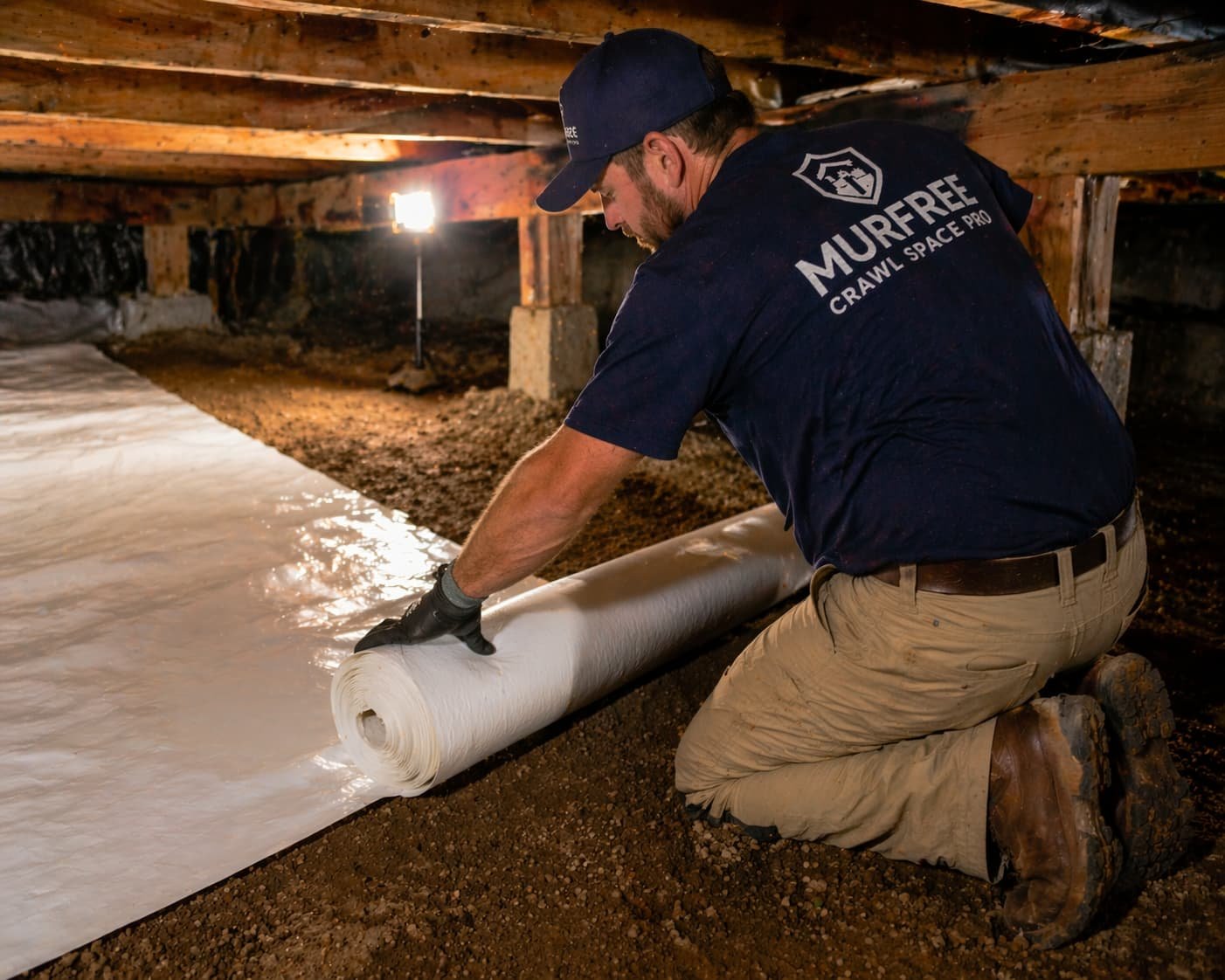
A crawl space vapor barrier is a sheet of heavy-duty polyethylene plastic installed across the crawl space floor to block ground moisture vapour from migrating upward into the crawl space and the living space above. A properly installed vapor barrier covers the entire crawl space floor, runs up the foundation walls to above grade, and is sealed at all seams, penetrations, and transitions with waterproof tape. It is the foundational component of any crawl space moisture control system.
A vapor barrier alone — without vent sealing or wall insulation — addresses ground moisture transmission but leaves the crawl space vented to outside air. In Middle Tennessee’s humid summers, that outside air infiltration can introduce as much moisture as the vapor barrier prevents from coming up from the ground.
What Crawl Space Encapsulation Is
Crawl space encapsulation goes further than vapor barrier installation alone. A complete crawl space encapsulation seals the crawl space completely from both ground moisture and exterior air — combining a heavy-duty vapor barrier on the floor and walls with sealed crawl space vents that eliminate outside air infiltration. The result is a sealed, controlled environment that stays dry year round regardless of outdoor humidity conditions.
Crawl space encapsulation is the more comprehensive solution — and in Middle Tennessee’s climate, where humid summer air infiltrating through crawl space vents is a significant moisture source, it is typically the correct approach for Murfreesboro homes dealing with persistent crawl space moisture problems. According to the EPA, controlling moisture from all sources is essential for effective long-term mold prevention.
Key Differences Between Vapor Barrier and Crawl Space Encapsulation
The primary difference is scope. A vapor barrier addresses ground moisture transmission. Crawl space encapsulation addresses ground moisture transmission and exterior air infiltration — by sealing the vents and treating the crawl space as part of the conditioned building envelope rather than an outside space. Encapsulation typically also includes insulation on the foundation walls, which adds thermal performance that a vapor barrier alone does not provide.
Cost reflects the difference in scope. A vapor barrier installation in a Murfreesboro home typically runs $1,500 to $4,500. A complete crawl space encapsulation runs $2,500 to $7,000 or more depending on crawl space size and conditions. The additional investment in encapsulation delivers meaningfully better moisture control and energy performance in Middle Tennessee’s climate.
Which Does Your Murfreesboro Home Need?
For most Murfreesboro homes with vented crawl spaces experiencing moisture problems, full crawl space encapsulation is the correct solution. Vapor barrier alone is appropriate where the crawl space is already effectively sealed from exterior air infiltration and ground moisture is the only source being addressed. Where vented crawl spaces are drawing in humid outside air — which describes the majority of moisture-affected crawl spaces in Rutherford County — encapsulation delivers results that vapor barrier alone cannot match.
We assess every crawl space individually during the free inspection and recommend the correct scope for the specific moisture sources and conditions present.
Frequently Asked Questions
Can I install a vapor barrier myself in my Murfreesboro crawl space?
A basic vapor barrier can be a DIY project — but proper installation with sealed seams, wall coverage, and sealed penetrations requires care and the right materials. An improperly installed vapor barrier with unsealed seams and incomplete wall coverage provides significantly less moisture protection than a correctly installed one. Professional installation ensures the job is done correctly.
Does crawl space encapsulation eliminate the need for a dehumidifier?
In many Murfreesboro homes, crawl space encapsulation alone controls humidity adequately. In homes with particularly high moisture loads or very large crawl spaces, a dehumidifier may be recommended to actively maintain target humidity levels in the sealed space. We advise on this during the inspection based on the specific conditions.
How long does crawl space encapsulation last compared to a vapor barrier alone?
Both a properly installed vapor barrier and a complete crawl space encapsulation system last 20 years or more with a quality heavy-duty barrier product. The encapsulation system maintains its effectiveness more reliably over time because it controls moisture from all sources — not just ground vapour. Call (615) 535-5291 for a free crawl space inspection and recommendation.